The Place and the Kitchen
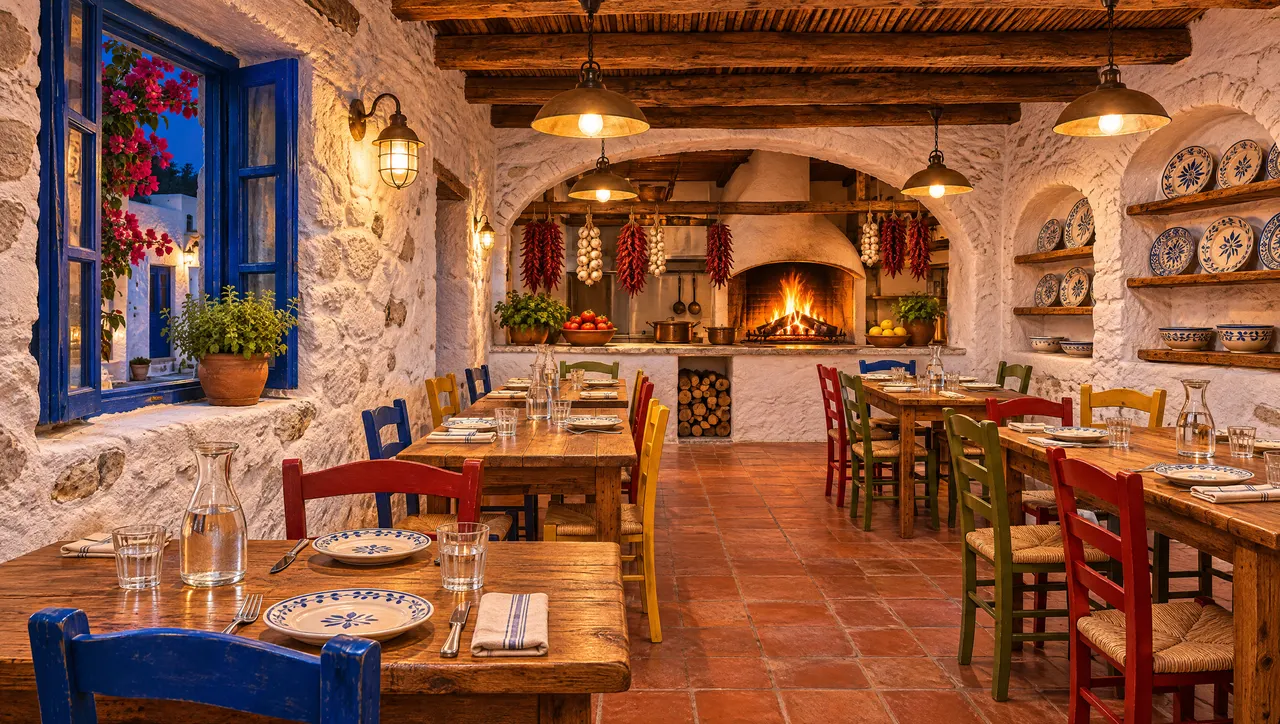
The ground floor and courtyard of a century-old stone house. The kitchen is part of the dining room and the fire burns in plain view.
The hearth
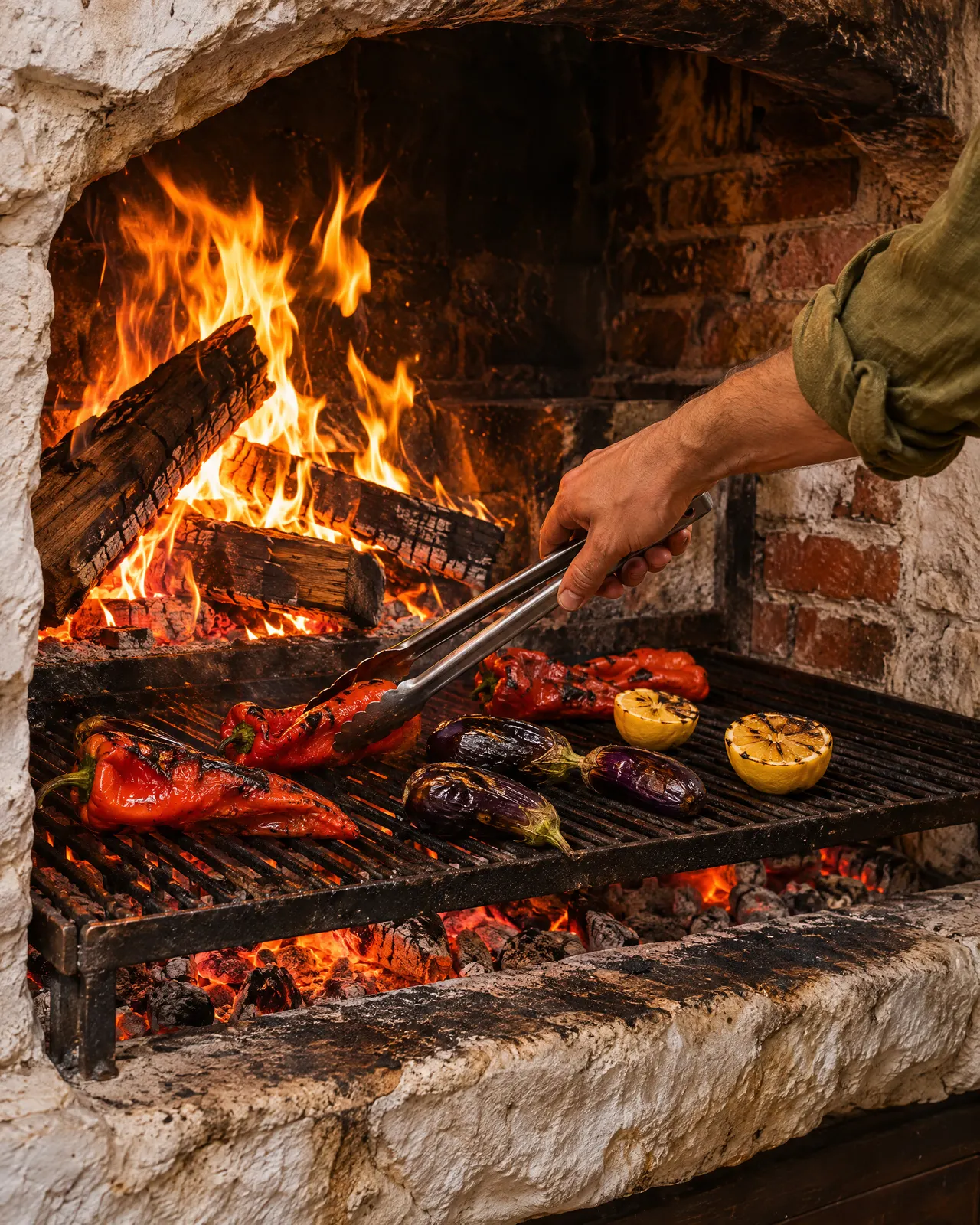
The hearth is a stone counter set against the old oven wall of the house. The grill is raised and lowered on a chain; the cook manages the heat by raking the embers from one side to the other.
Two kinds of wood are used. Oak gives long, even embers for fish and meat. Branches pruned from the olive groves burn fast and are used to blacken the skins of peppers and aubergines.
Market and growers
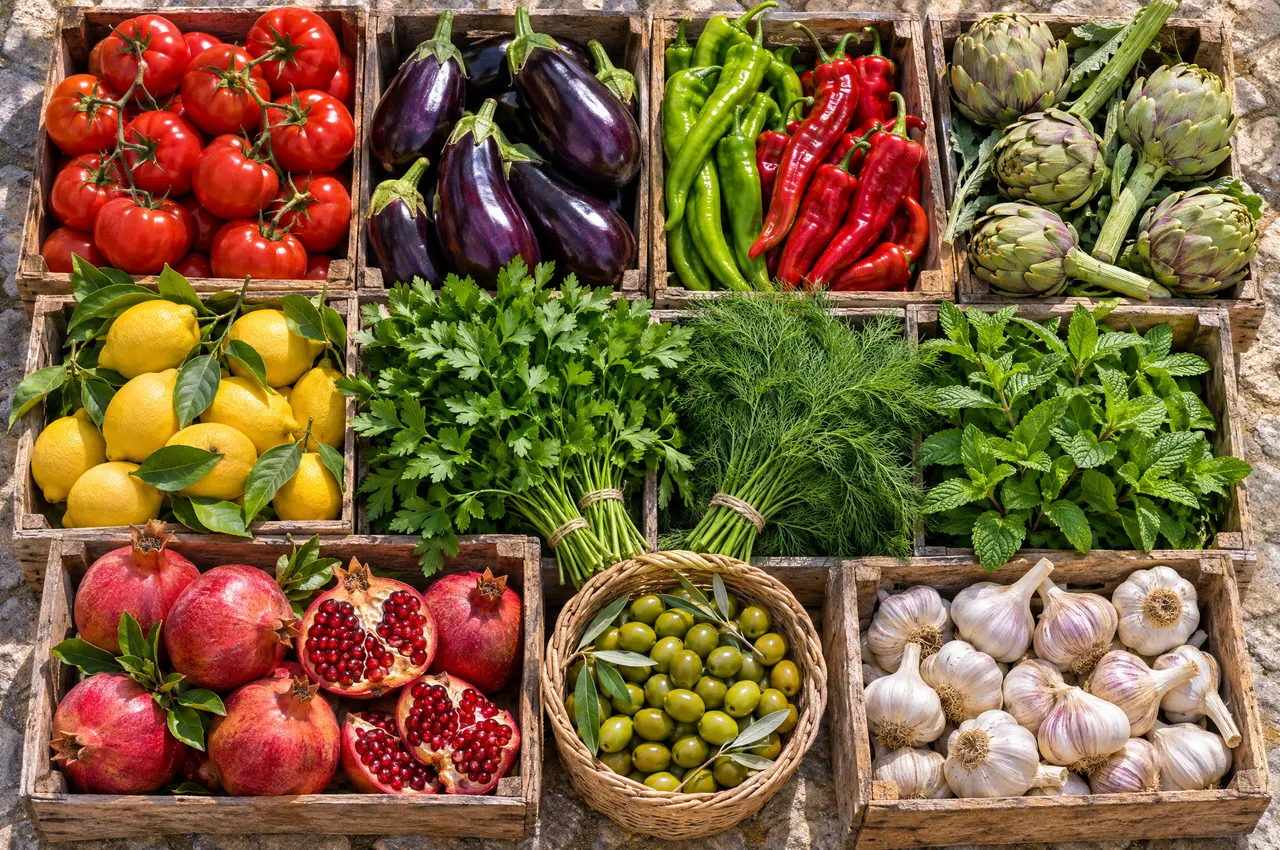
Most vegetables and herbs are bought at the Urla market, held on Tuesdays and Saturdays. Artichokes come from the fields of the peninsula, olive oil and goat’s cheese from nearby villages.
Fish is bought from the small boats that come into the harbour in the morning. Whatever was caught that day is cooked, which is why the fish on the menu changes daily.
The stone oven
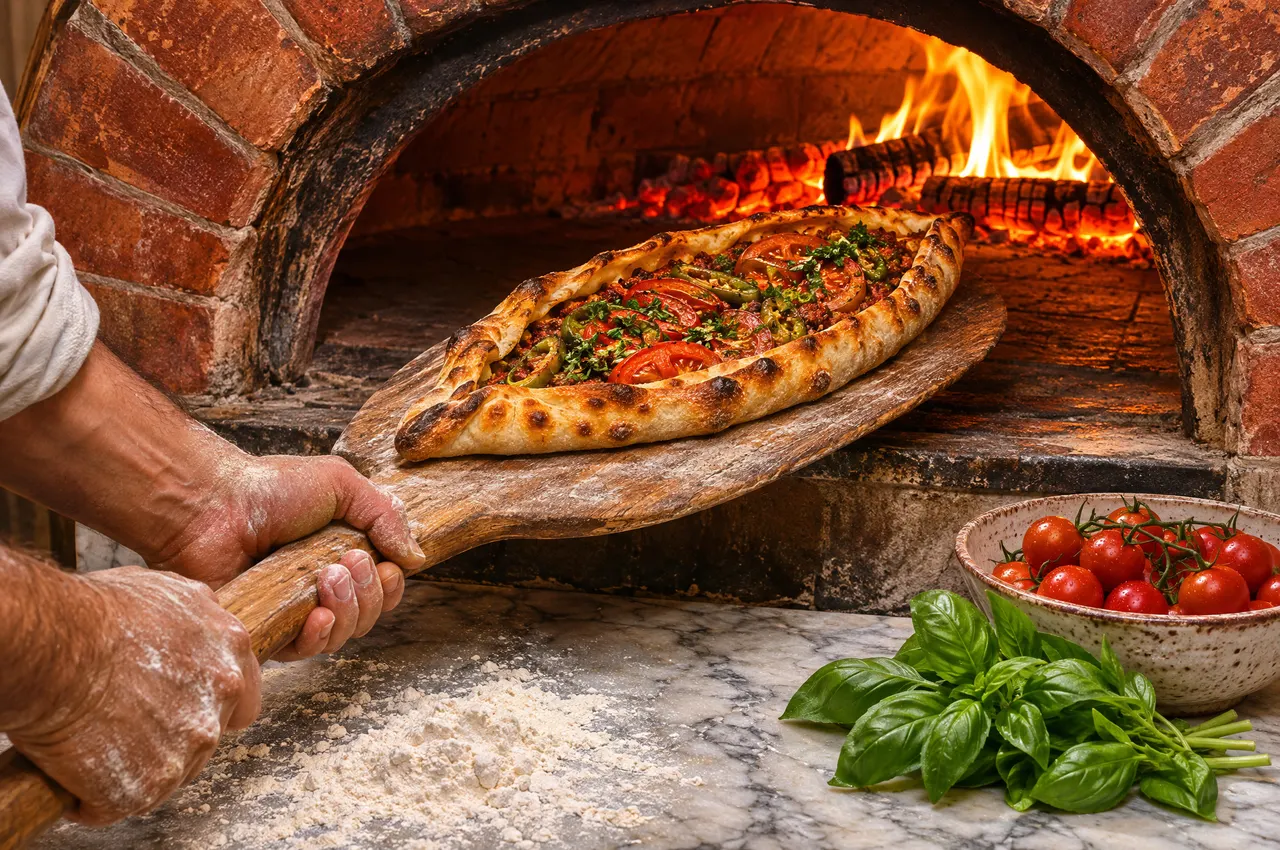
The domed oven is lit at seven in the morning and heats up until noon. Bread goes in first, then pide; in the evening, as the heat fades, the lamb shoulder and the rice pudding bake.
The dough is made with sourdough and flour from a mill on the peninsula.
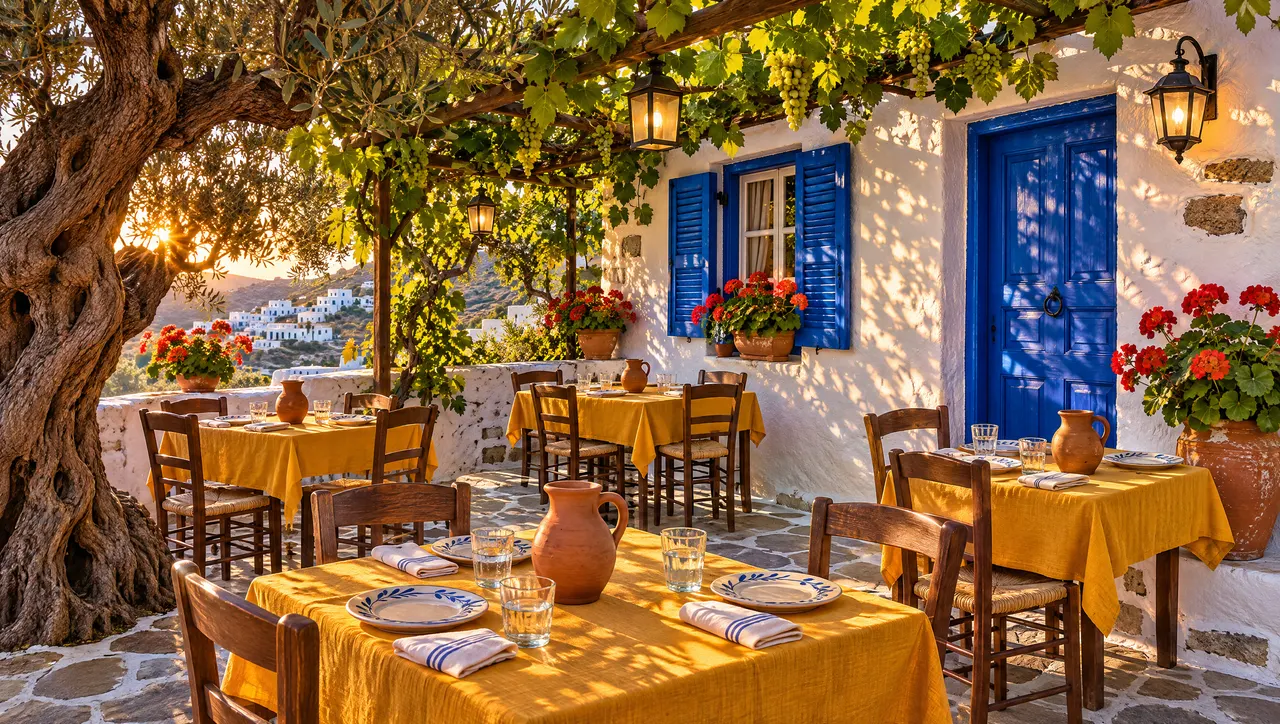
Dining room and courtyard
-
42 guests
Dining room
Stone walls, a timber ceiling and the open kitchen. In winter all service is here.
-
56 guests
Courtyard
Under the vine and an old olive tree. Open from April to the end of October.
-
8 guests
Hearth counter
A long counter facing the fire, for those who want to watch the cooks at work.
Three kitchen rules
- No vegetable stays on the menu once its season is over.
- What should be cooked over the fire is cooked over the fire; there is no deep fryer.
- Leftover bread is never thrown away; the next day it becomes bread pudding.
Access
- Entrance
- Through the courtyard, step-free; wheelchair accessible.
- Toilet
- On the ground floor, accessible.
- Parking
- None on site. The harbour car park is a five-minute walk.
- Pets
- Welcome in the courtyard.